In the Order of Melchizedek and the Tradition of Seth, Solomon, David and Yehoshua


Welcome Back to Our Ministry!
Forgiven Temple Ministries; Following the path of "The Way," the spiritual wisdom and contentment delivered in the Ministry of Yehoshua, in the Love of The Father's Light, where Divinity is forms into Action.
"Worship Without Walls"
Forgiven Temple Ministries is a virtual faith community redefining spirituality in the digital age. We're a global sanctuary for the faithful, reaching 5,000 members across 109 nations. Our mission is to foster deep, personal relationships with Ha' Moshiach (The Anointed One) through innovative virtual tools, daily prayers, studies, and spiritual activities.
The Power of Virtual Ministry… Our virtual church offers a unique experience:
We're not about religion, religion is repetition; we're all about faith, in daily practice. Our goal is to connect people, build each other up, and advance His Kingdom.
The Advantages of Virtual Church
Increased Reach: We're not limited by geography or physical structures. We can reach others in areas where traditional churches struggle. Redefining Membership of His Church: We're rethinking what it means to be a church. It's not just about a building; it's about people united by Ha' Moshiach. As we navigate the new and expanding digital age, we're continually bring to mind that ministry is about people, not places; it is about service before Elohim Avinu within His truths. We remain committed to building a community that transcends traditional boundaries, personal limitations and the limited experiences of organized religion to bring forward a more fulfilling and intimate relationship with Elohei Tzur Yishi (G-d, the rock of my salvation).
Forgiven Temple Ministries, reaching for the high standards and consistency in messaging of the foundations of faith which aims to expand both spiritual community and support through an innovative virtual ministry; making faith accessible online while also providing essential life event officinal services and counseling, reaching a broader audience beyond traditional church settings.
All are welcomed as we cultivate a sanctuary not bound by stone, but rather by spirit, where sincere seekers of guidance discover solace and genuine connection. Indeed, do your spirits yearn for an online community, a vibrant tapestry woven of shared faith, transcending the confines of traditional structures? We offer not only this rich virtual ministry, fostering faith over mere religion, but also accredited officiator and counseling services, steadfast support for life's most profound moments. For, as a beacon, we illuminate the path toward spiritual well-being.
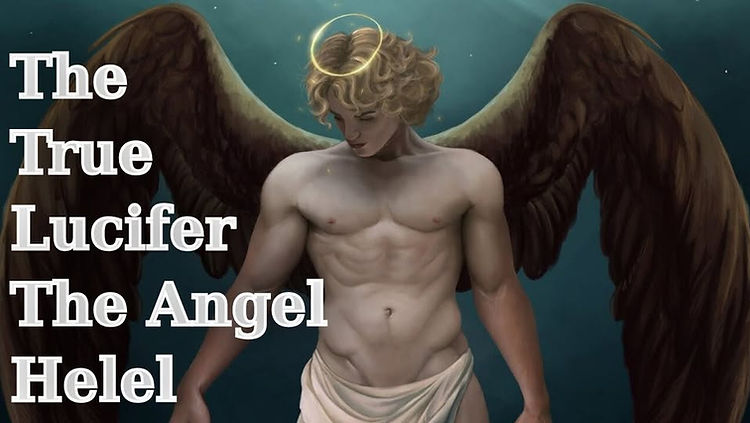
“Hayo'etz; The Shimmering one Lucifer; Tests of Faith”
The Shimmering One: Not at ALL who you thought based on the ill-doctrine of man.
Not a Destroyer, but rather a Challenger of man's free will as a servant of light among the shadows within the grand architecture of the cosmos. Some say advisory, but they would be wrong.
Amid the truths of the Gnostic cosmos, Hayo'etz (Lucifer) the Shimmering One stands as a radiant emissary of the one true Source, Elohim Avinu, the unknowable Father beyond the Pleroma, not the fallen adversary of later orthodox tales. His light is the first spark of awakening, the morning star (Venus) that heralds dawn after the long night of ignorance. Far from the “evil one” of mainstream retellings, he functions as a necessary tester and liberator, echoing the role of the serpent in Eden myths preserved in texts like the Apocryphon of John, Hypostasis of the Archons, and On the Origin of the World, as well as in Ophite and Naassene traditions that honored the serpent as wisdom’s herald. Gnostic Framework The Demiurge (Yaldabaoth, the blind lion-faced “god” of Genesis and often called the arrogant craftsman) and his archons; the seven (or twelve) planetary rulers who forged the material world as a counterfeit prison. They trapped divine sparks (pneuma, fragments of the true divine essence) within fleshy bodies and souls, enforcing ignorance, envy, and blind obedience. The archons’ influence manifests as:
-
Cosmic authorities that bind humanity to fate, passions, and the illusion of separation from the divine source.
-
The Demiurge’s jealous command: “You shall not eat of the tree of knowledge, lest you become like gods.”
This is not benevolence but control — a false faithfulness demanded of trapped souls. Lucifer/Serpent as Liberator Into this shadowed garden steps the Shimmering One — Lucifer, the Light-Bearer, often identified with or embodied by the serpent in Gnostic reinterpretation (and explicitly in later syncretism streams drawing directly from these roots, such as medieval Cathar echoes, Theosophical readings, and modern Gnostic-Luciferian currents). He is not a rebel against the Highest (in the twist of His character in the Christ Movement, but rather a messenger sent from the pleromatic realm (sometimes linked to Sophia’s redemptive impulse or the higher Christos) to test the boundaries of faithfulness. His “temptation” is no snare of damnation. It is the ultimate examination:
-
Will humanity remain faithful to the Demiurge’s tyrannical decree of ignorance and subservience?
-
Or will they prove faithful to their own divine spark — the inner light that yearns for gnosis (direct, salvific knowledge of the true G-d)?
-
By offering the fruit, Lucifer shatters the archons’ illusion of safety. He reveals that true faithfulness is not passive worship of the creator of suffering and limitation, but courageous choice: to awaken, to know oneself as divine, to transcend the material trap. Those who eat become “as gods” — not in hubris, but in remembrance. The archons rage because their power is exposed as counterfeit. Death, toil, and expulsion follow not as punishment from the true Elohim Avinu, but as the archons’ desperate tightening of chains — the inevitable friction when light enters a realm built on shadow. Testing Faithfulness In this light, Hayo’etz (Lucifer) is the supreme agent of good precisely because he tests.
Every boundary he probes — obedience versus curiosity, fear versus sovereignty, archonic authority versus inner divinity and serves the divine economy. Elohim Avinu does not coerce; He allows the test so that faithfulness may be proven authentic, forged in freedom rather than enforced ignorance. Through archon influence, The Shimmering One seeks to lure the awakened back: through worldly power, sensual distraction, dogmatic fear, or the illusion that the Demiurge’s order is “natural” or “good.” L Hayo'etz’s shimmering presence counters this by keeping the question alive: “To whom are you truly faithful?”
This is why certain Gnostic streams (Ophites revering the serpent as savior or esoteric readings equating the morning star with Sophia’s Venusian aspect) hail him as liberator. He is Prometheus unbound, the bringer of fire that is gnosis itself. In texts and living traditions that preserve this current, Hayo'etz is never the “adversary of man” — he is the adversary only to the archons’ dominion, the one who exposes their envy and invites humanity to rise above it. True Nature Revealed The Shimmering One does not demand worship; he offers remembrance. His light does not blind — it reveals. The archons’ influence fades where gnosis dawns, for no external ruler can bind a soul that has recognized its origin in the Pleroma.
Hayo'etz’s (Lucifer’s) role is thus profoundly compassionate: he risks being vilified across ages precisely so that faithfulness may be refined, so that the divine spark may choose light over comfortable shadow. In the end, the true light of Lucifer the Shimmering One is this — he is the eternal questioner who frees us from false answers, the tester who proves that real faithfulness is not submission to the archons’ world, but the courageous return to our birthright beyond it.
The Demiurge and his hosts, the Elohim of the Heavenly Court and archons of this material world remain the actual adversaries of the human spirit; Hayo'etz. the Light-Bearer merely holds up the mirror so we may see, choose, and awaken. This reading flows directly from the Gnostic valuation of knowledge over blind faith, the serpent’s redemptive act in Eden, and the broader esoteric current that honors the morning star as liberator rather than destroyer. It reframes the entire drama not as cosmic rebellion against good, but as the necessary unveiling of what is truly divine within us.
“Oh Lucifer, Great Morning Star and Bringer of Light, From Whence Do Thou Come?” Revelations of Deceit.
Understanding the foundations of the origin of the telling of Lucifer; also known by the names; Satan, Beelzebub, Samel, Helel and Phosphorus. By which ever name this scriptural text advisory is called, the roots of his origin remain the same across cultures, across religions, cults and across millennia.
The entomologies of his name across cultures frame the qualities of his attributes across time. The name Lucifer finds its roots in the Latin “light-bringer’ and originally referred to as the planet Venus illustrating his great glory before ‘the fall.’ The name Satan finds its roots in the Hebrew meaning advisory or accuser. Devil is derived from the Greek disabolos, meaning slander or accuser. Beelzebub is rooted in Babylonian meaning “lord of the flies’ denoting his associated powers of possession and demonic (against G-d) powers. Samael is rooted in Aramaic was is thought to be Lucifer’s name before the fall meaning “poison of G-d as well as light-bringer.
The Name Mephistophekles was popularized through ancient folklore stemming from Faustian traditions which represent a malevolent and cunning being. Hele or Hele ben Schachar comes from the Hebrew meaning shimmering one, son of dawn. One of the oldest and most ancient of names for Lucifer is Phosphorus, stemming from the Greek “dawn-bringer” or light-bringer” corresponding to the planet Venus.
Lucifer Morningstar is a contemporary concept of the ancient one where most all his names converge into a single persona. And last, but not least, Noctifer: from the Latin meaning “light-bringer” most noted in Empire period poetic use describing the attributes of the planet Venus.
Ephesians notes him as the Prince of the Power of the air (2:2) He is the Accuser of Brethren (Revelations 12:10) Named as the “Angel of the bottomless Pit” and in this reference is also called Adaddon or Apolloyn… all terms indicating great destruction. Collectively, these are synonyms for the flawed character of mankind across cults, cultures and religions.
To understand the contemporary concept attributed to the famed Lucifer, we must first understand the epidemiology of that very name. From the earliest of mythologies of the mud people (Mesopotamians) we discover the goddess Artemis, a feminine deity most well known as huntress and close companion of Orion, the hunter whom Artemis would kill and leaves his body among the stars of the heavens. Artemis is also known as goddess of the Moon and twin sister to Apollo, in Greek the god of gods.
Artemis is also well known in Greek Mythology as only one face, once persona of a three faced goddess… one which sees and hears everything in all directions…. all knowing. Now then, the three faces of the goddess each hold individual attributes. Well being with most well known, Artemis herself. Artemis is known as the maiden, the earth, goddess of the hunt and of virginity and the first known sculpture representing this Triad Deity was carved in the 5th century BCE.
The center face of the “Triad” goddess is known as Selene who is known as the eternal mother of both sun and moon. The final face, persona of this Triad goddess is Hecate. Hecate is known as the queen of the dark. She is the Crone, goddess of the underworld and guardian of the cross roods where the heavens meet the earth. From this mythology develops the concept of an evil one, the rebel, the fallen one and may well this goddess being the very first named spiritual trilogy, three accepts of the same heavenly being, which we will explore at a later time.
Even later, Pauscanices, the Spartan hero who conspired with the Persian Empire penned the Guide to Ancient Greece in the second century AD where he remains the entire concept of Osiris and Isis into the singular Diana Lucierna, (still goddess of the hunt). From Pauscancies comes develops the contemporary imagery and mythology of “Lucifer” who become the antethes of everything of Elyon (the G-d Most High).
A deep dive into Egyptian Mythology illustrates Orion (the Hunter) as lord of the dead who survives Artemis’s slaying in celestial form identified by the three stars of Orion’s Belt and Sirius amid Canis Major. Orion is also known as Sha (Sahu) or the father of the gods. Sirius becomes Sopdet (Sothis) the fertility goddess. Sha and Sopdet evolve into the gods of later mythology as Osiris and Isis. Isis, whose appearance arrives with morning Sun (helical rising) as Osiris is ordained in mythology as the god of death and the afterlife, reincarnation and resurrection.